Soothing, healing and full of antibiotic herbs and oils, this homemade antibiotic ointment is a must have for parents. Perfect for naturally healing scrapes, small cuts, bruises and more.
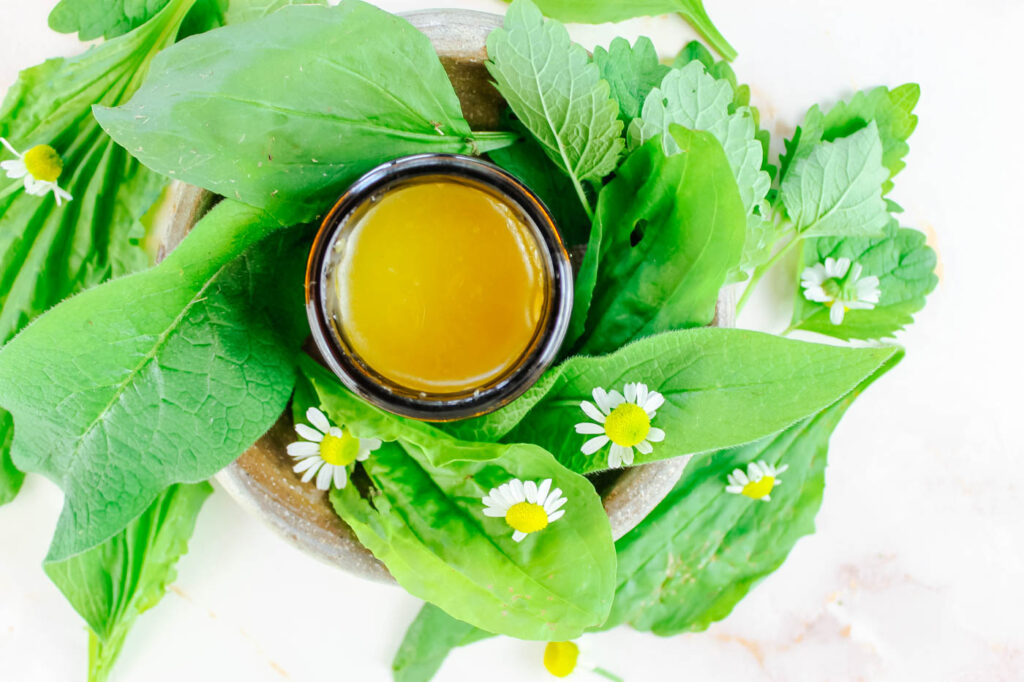
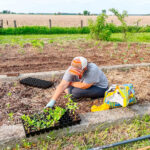
Growing herbs in my garden goes well beyond using them in dinner recipes. I love growing medicinal herbs to fill my medicine cabinet, should we need them to support us during the cold and flu season or to relieve gas and bloating.
Every year there are specific herbs, such as calendula that I preserve to create topical salves and skincare such as calendula infused soap or this homemade antibiotic ointment.
With a wobbly toddler on the homestead, this salve comes in handy for the bumps and scrapes she gets as she toddles around the yard or bonks her head during her adventures at the park.
Learn how to make natural Neosporin in the recipe below.
Why Avoid Neosporin?
Many experts recommend avoiding the use of Neosporin or a triple antibiotic ointment due to the fact that is has little healing power and many are allergic to the ingredients. Plus, it contains chemicals and petroleum that isn’t beneficial to your body.
So what to use instead of Neosporin? I suggest using natural ingredients that work with your body to bring healing and prevent infection such as this homemade antibiotic ointment. The herbs in this healing salve soothe the skin and support it as it recovers.
Why You’ll Love This Recipe
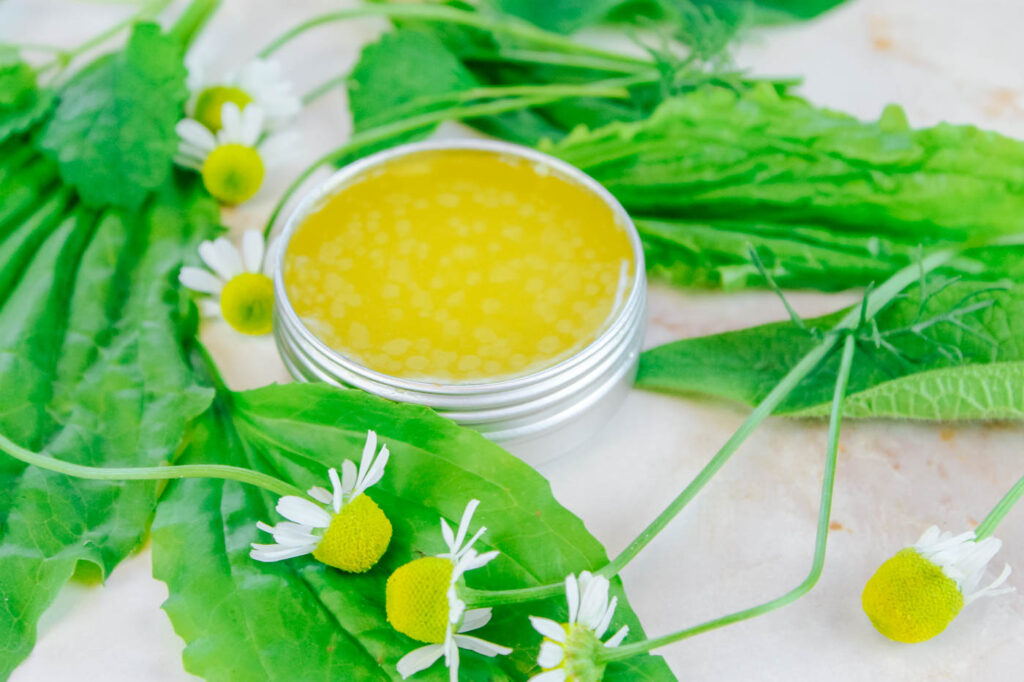
Natural Skin Care – This homemade antibiotic ointment is made with real ingredients from nature, without any synthetic ingredients, preservatives or petroleum jelly.
Easy to Use – The salve glides smoothly onto the skin, helping to soothe troubled areas.
Travel-Friendly – Pour the finished salve into small containers or tubes, perfect to place in a purse or backpack of on-the-go moms.
Ingredients
Oil – you can use a variety of oils but I recommend either sunflower oil or olive oil. Sunflower oil is deeply hydrating while olive oil is heavier but nourishing and is available to purchase in many stores.
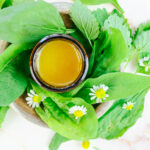
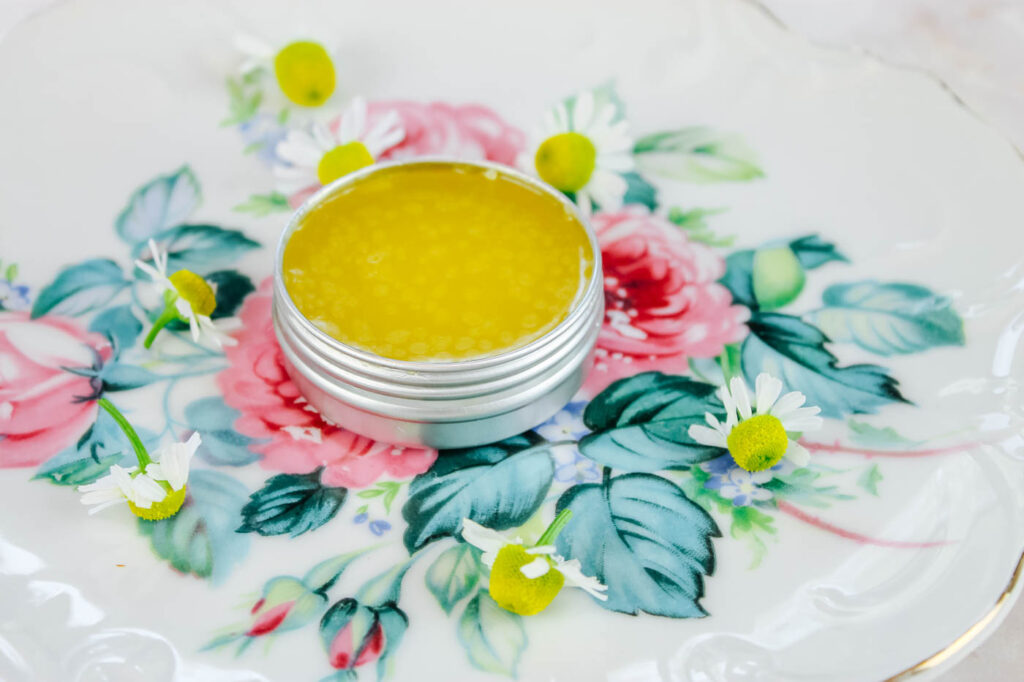
Dried herbs – a mixture of herbs such as calendula, comfrey and chamomile provides this homemade antibiotic ointment with a powerhouse of healing properties. See below for a list of herbs that are great for healing the skin.
Beeswax – local beeswax or pellets purchased online can be used.
Vitamin E – while this is an optional ingredient, I like to add it due to its ability to reduce scars, moisturize skin and add hydration.
Essential oils – tea tree or lavender are nice choices. However, if you’re using it on wee ones, I usually skip the essential oils.
What Herbs are Good for Wound Salve?
Calendula – has wondrous healing benefits. It has antibiotic and anti-inflammatory properties, helps to decrease pain and accelerates cell division in your body helping to heal your body faster.
Plantain – contains anti-inflammatory, astringent and antimicrobial properties. It can help treat rashes and dry skin and can prevent infection as your body heals due to its antiseptic properties. (Source)
Yarrow – is another good herb to add to this natural antibiotic ointment for wounds. Yarrow stops bleeding by constricting blood vessels and encouraging clotting.
Comfrey – is a superior herb for topical injuries due to its ability to rapidly divide cells. It quickly heals bruises, cuts, sore muscles, burns and can even stop bleeding.
Chamomile – works to help calm and soothe skin. It has anti-inflammatory properties which help to relieve redness and irritation.
Oregano – is a great natural antibiotic which makes it a great addition to this homemade Neosporin. In addition, oregano contains powerful antioxidants and anti-inflammatory qualities. (Source)
Other Good Herb Options
- Marshmallow
- Cayenne
- Thyme
Essential Oil Options
- Tea tree essential oil is antimicrobial and antibacterial making it a great addition to this natural Neosporin recipe. (Source)
- Lavender essential oil is soothing to the skin and has antibacterial properties. (Source)
- Lemon essential oil contains antibacterial and antioxidant properties. (Source)
Tools You May Need
This post contains affiliate links, which means I make a small commission at no extra cost to you. In any case, I only link to products we actually use on our homestead and that I believe can truly benefit to you. See my full disclosure here.
Canning jar
Saucepan or small pot
Spatula
Metal tin or amber glass container
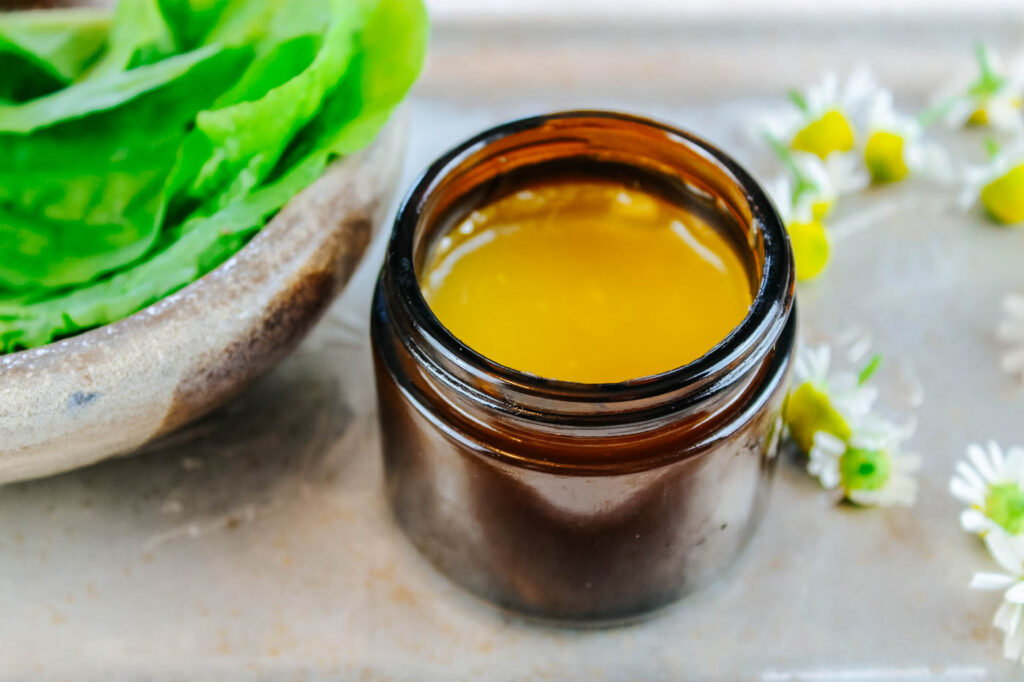
How to Make Antibiotic Ointment
Makes: about 3/4 cup
Ingredients
5 ounces (150 ml) sunflower or olive oil
1/2 cup (10 grams) dried herbs, crumbled (mixture of at least two kinds of herbs including calendula, plantain leaves, yarrow, comfrey, chamomile or oregano)
1 1/2 heaping tablespoons (15 g) beeswax
25 drops vitamin E oil
5 drops essential oil, optional
Directions
To infuse the oil, place the dried herbs into a canning jar and cover with the oil. If the herbs rise above the oil, add a little bit more oil to keep the herbs submerged. Place a cap on top and store in a cool, dark place for four to six weeks, shaking periodically.
After the oil has infused, use a fine mesh strainer set over a bowl or clean jar and strain oil.
Add oil and beeswax to a heatproof canning jar. Place the jar into a small saucepan containing a few inches of water. Heat over a medium-low burner until the beeswax has melted. Remove jar from pan.
Add in vitamin E oil and essential oils, if using. After the oils are thoroughly mixed, pour into a small container or jar, and let it cool until solid. Store in a cool, dark place.
Note: If you plan to use it on little ones or animals, I would skip adding the essential oils so that it is useable for all.
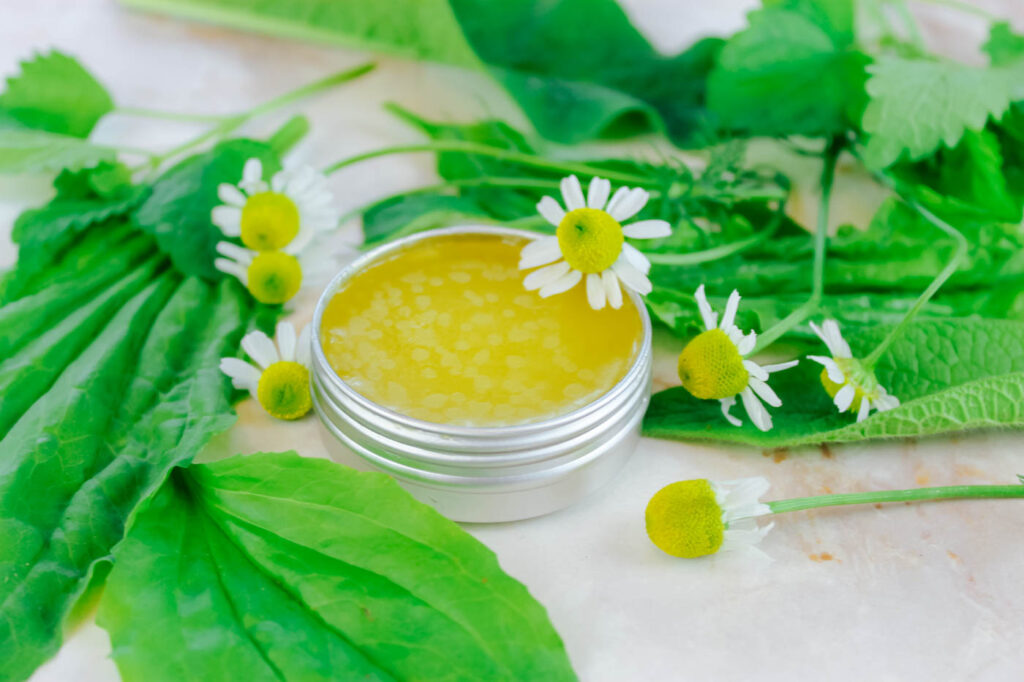
How to Use Homemade Antibiotic Ointment
Apply a small dollop of ointment to bruises, bumps, burns, rashes or minor cuts or scrapes.
How Long Does Salve Last?
The homemade antibiotic cream, when stored properly should last at least 12 months, sometimes up to 2 years.
More Homemade Remedies
The information in the article is not intended to treat or prevent any disease. All information is for entertainment or educational purposes only. Please see your physician for medical advice.
Homemade Antibiotic Ointment
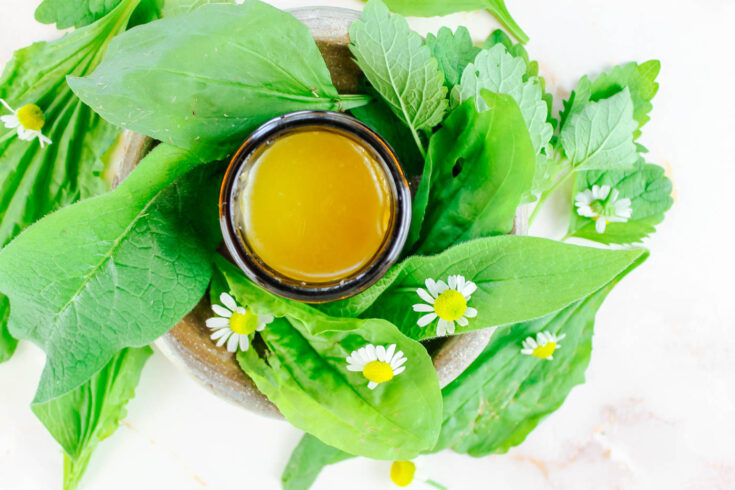
Soothing, healing and full of antibiotic herbs and oils, this homemade antibiotic ointment is a must have for parents. Perfect for naturally healing scrapes, small cuts, bruises and more.
Ingredients
- 5 ounces (150 ml) sunflower or olive oil
- 1/2 cup (10 grams) dried herbs, crumbled (mixture of at least two kinds of herbs including calendula, plantain leaves, yarrow, comfrey, chamomile or oregano)
- 1 1/2 heaping tablespoons (15 g) beeswax
- 25 drops vitamin E oil
- 5 drops essential oil, optional
Instructions
- To infuse the oil, place the dried herbs into a canning jar and cover with the oil. If the herbs rise above the oil, add a little bit more oil to keep the herbs submerged. Place a cap on top and store in a cool, dark place for four to six weeks, shaking periodically.
- After the oil has infused, use a fine mesh strainer set over a bowl or clean jar and strain oil.
- Add oil and beeswax to a heatproof canning jar. Place the jar into a small saucepan containing a few inches of water. Heat over a medium-low burner until the beeswax has melted. Remove jar from pan.
- Add in vitamin E oil and essential oils, if using. After the oils are thoroughly mixed, pour into a small container or jar, and let it cool until solid. Store in a cool, dark place.
Notes
If you plan to use it on little ones or animals, I would skip adding the essential oils so that it is useable for all.