Learn how to get started milling your own grains at home in this detailed and easy-to-follow guide. Find a mill, learn what wheat to start with first, where to buy it and even try a few beginner-friendly recipes.
This post contains affiliate links, which means I make a small commission at no extra cost to you. In any case, I only link to products we actually use on our homestead and that I believe can truly benefit to you. See my full disclosure here.
2021 is where it all changed. My gut health was a wreck. My blood sugar was out of whack. And I felt terrible. For one small moment, I thought maybe I had a gluten sensitivity. After trying a bag of commercially milled einkorn flour and still feeling bad, I felt hopeless.
To spare you the details of a long story, God gave my mother and I the revelation of real bread. That is bread made with freshly milled flour.
With little knowledge, we jumped in head first, purchased a mill, a cookbook and began diving deep into how to mill fresh flour at home. To be honest, the beginning loaves of bread may have technically been edible but they certainly wouldn’t win any awards. The transition from all purpose flour to fresh milled wheat took some learning. But after gaining a better understanding, not only did our baking quality improve, our quality of life also greatly increased.
Today my health, my gut and my blood sugar levels have significantly changed for the better – praise the Lord! Now I am happily baking up breads and muffins and all things whole grain, giving my family nutritious food made with fresh milled flour.
My hope in sharing this post is that whether you are in a health crisis or you are simply seeking to provide your family with real whole foods, this guide will help you learn how to get started milling your own grains at home.
Fresh Milled Flour Basics
When you first start out making fresh milled flour at home, it can seem a bit overwhelming. You can wonder where to buy grain for home milling? How to use a grain mill to make your own flour? Or even how to use fresh milled flour for beginners?
Consider this article as your getting started guide or fresh milled flour 101 course! I have laid out a step by step process and answered the most frequently asked questions to start you off on the right foot when learning how to get started milling your own grains at home.
What is Freshly Milled Flour?
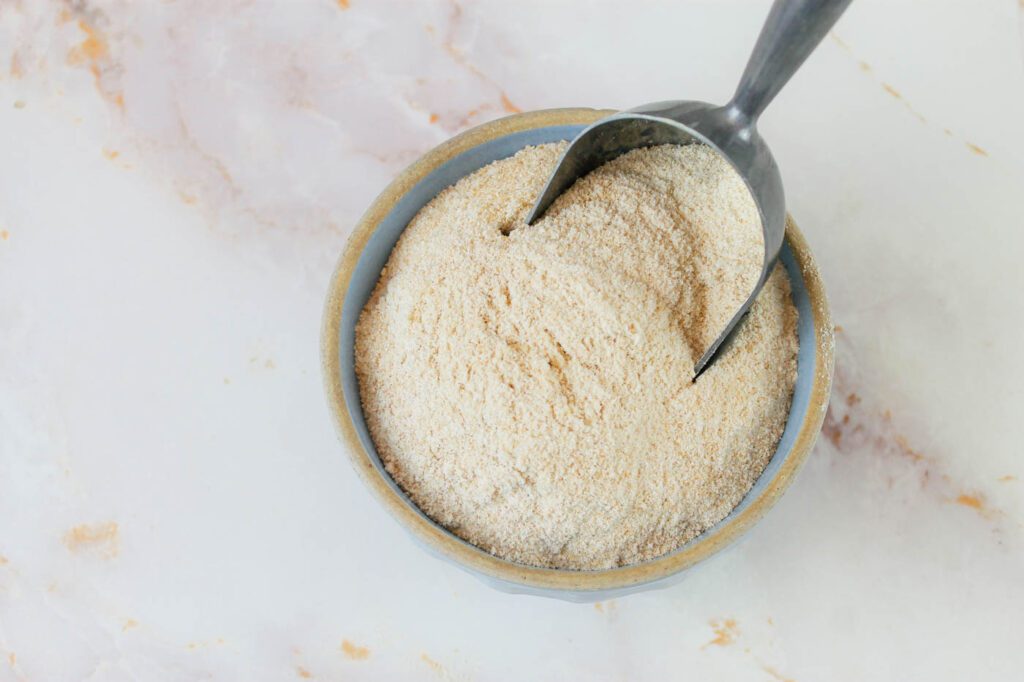
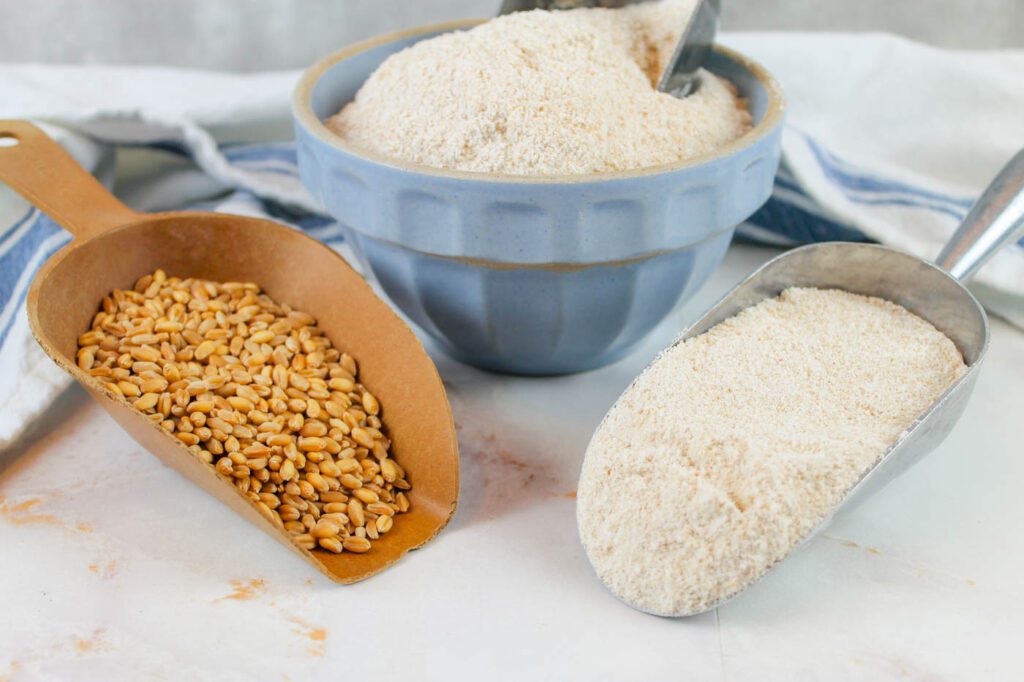
Freshly milled flour is created when you take a grain, such as hard white wheat berries and run it through a flour mill transforming it into fresh ground flour that can be use to make breads and various other baked goods. The reason people choose to grind flour at home is largely due to the fact that fresh ground flour retains essential nutrients unlike processed commercial flour.
Is Freshly Milled Flour More Nutritious?
Yes! Today a bag of flour from the grocery store does not provide the fiber and nutrients that your body needs. When grain is kept whole, it retains all of its nutrients and oils. As soon as the bran (the outer hard shell) is broken, the nutrients deteriorate quickly.
Commercially sold flour can turn rancid if the oil-rich germ and other nutrients are left. In order to avoid this, commercial flour must remove these components so that the flour is shelf stable. Even if the flour is organic or labeled as enriched, there is absolutely no comparison to the health benefits of milling your own flour at home. By milling your own flour it ensures that you will get the most nutrients, vitamins and fiber.
Here a few of the many reasons to switch to using fresh milled flour in all of your baking and cooking.
- You get 100% of the germ, bran and endosperm. No sifting, removing or adding in synthetic ingredients with fresh milled flour.
- Superior nutritional content compared to conventional flour.
- Packed full of both insoluble and soluble fiber.
- No additives or preservatives.
- Terrific flavor.
- Ability to control what goes into your bread so that you can make it your own.
- Improvement of health including blood sugar levels, digestion and weight.
Getting Started With Fresh Milled Flour
Now that you’ve done your research and are convinced that milling your own grains is the best choice for you and your family, you’ll need a few items to get started. Continue reading below to learn what you need! It is so easy to begin!
How to Choose Wheat
The first thing you’ll need to get started milling your own grains at home is a bag of wheat berries. There are dozens and dozens of wheat varieties to choose from so as a newbie to the world of fresh milled flour, it can be tricky to know where to start. What are the best wheat berries for bread? Is there is type of grain that is gluten free? What are ancient grains?
Hold up. Instead of information overload, let us start with the basics and focus on two simple types of grains.
What are Wheat Berries?
A wheat berry is an edible kernel that comes from the head of a wheat plant. The hull is removed, leaving the whole grain in tact with the germ, bran and endosperm. Before processing, the wheat berry contains many nutritious vitamins, minerals and other nutrients. Wheat berries have a similar look to brown rice and can be used for cooking and sprouting. When ground in a grain mill, the wheat berries turn into flour and are used to make everything from breads and cookies to tortillas and muffins.
Which Wheat Berry is Best?
There is no “best” when it comes to wheat. Rather it depends on what you are making. The major difference you want to consider when deciding what is the best wheat berry for your recipe is the amount of protein the wheat kernel contains. Remember this, the more protein the wheat contains, the better gluten formation there will be, which makes for higher, fluffier bread.
Instead of getting a variety of grains to try, start with two! Hard wheat and soft wheat. Both are very versatile in the types of recipes you can use them in.
Hard Wheat Berries
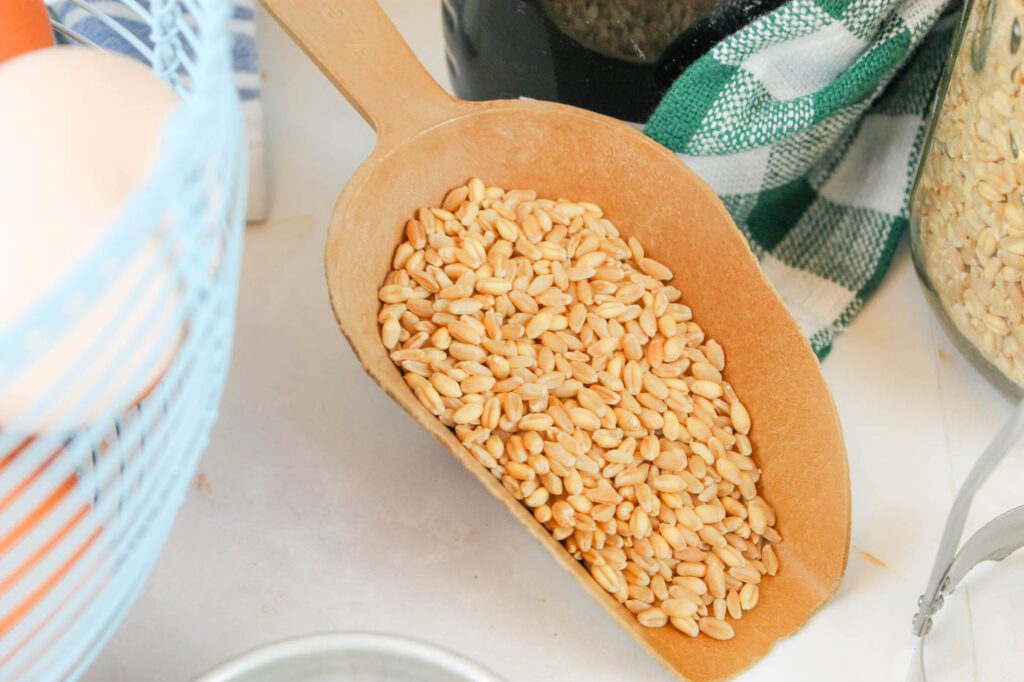
Hard wheat, that being hard red or hard white is a low-moisture kernel that contains 10% to 14% protein. Due to the high amount of protein, it is an ideal grain to use in yeasted baking recipes such as bread made with fresh milled flour.
Red and white are just words to describe the color of the wheat kernel. There is a slight difference in flavor when it comes to red versus white wheat. Red has a nuttier flavor while white is more plain. Both types create beautiful bread. Start with one type first until you get the hang of making bread then purchase the other variety and experiment to see which taste you like best.
Soft Wheat Berries
Soft wheat is intended for pastry making such as cakes and cookies. It has a lower protein count and a higher moisture content, making the wheat berry soft in hardness with minimal gluten potential. Due to its lack in gluten formation, this type of grain is great for sweet baking recipes such as banana bread, biscuits, pie crusts, cranberry oatmeal cookies and peach spice muffins.
Once you’ve conquered the basics, I have an article you’ll want to check out – how to choose wheat berry varieties. You will learn everything you need to know about modern wheat, ancient wheat and many other types of grains including corn and oats.
Where to Buy Wheat Berries
Azure Standard – My favorite place to purchase large quantities of organic wheat berries is at Azure Standard. They have a variety of grains to select from including hard white, hard red, spelt, kamut, soft white and durum wheat. Plus they are the most inexpensive place I have found to buy large quantities of grains.
Local Organic Wheat Farm – Check around your area to see if there are any farmers that will sell you wheat berries. In our area, we have a farmer that grows and sells heirloom and heritage grains.
Amazon – Yes, even Amazon sells wheat berries. We have purchased grains from them in the past but they tend to be very expensive.
Amish Stores – We make a drive out to Indiana at least once or twice a year to visit Shipshewana. There are some shops in town that sell wheat berries. They usually have an array of wheat berry varieties to choose from however sometimes they don’t always have organic grains in stock. If you have an amish store near by, it may be worth the trip to see if they sell wheat berries.
Bread Beckers – Is a well-known trusted resource for not only wheat but many other grain varieties, including buckwheat, oats, rice, millet, corn and barley. You can purchase their products at their retail store in Georgia or you can find a drop off location online.
How to Store Wheat Berries
My favorite way to store bulk grains is by placing them in a 5 gallon food-safe bucket with a gamma lid. You can purchase both of these items at your local hardware store. Approximately 25 lbs of wheat berries can fit into one 5 gallon bucket.
I store my grains in the basement. When I need the wheat berries, I fill up a glass mason jar with the grains from the bucket and store the container upstairs in my kitchen cabinet. This is much more convenient than taking a trip to the basement every time I need some grains.
To prevent bugs and insects from living amongst the wheat berries, I add 3-5 oxygen absorbers into the bucket.
For an in depth article on how to store wheat berries so that they will last decades, check out this post.
Other Ingredients You May Need
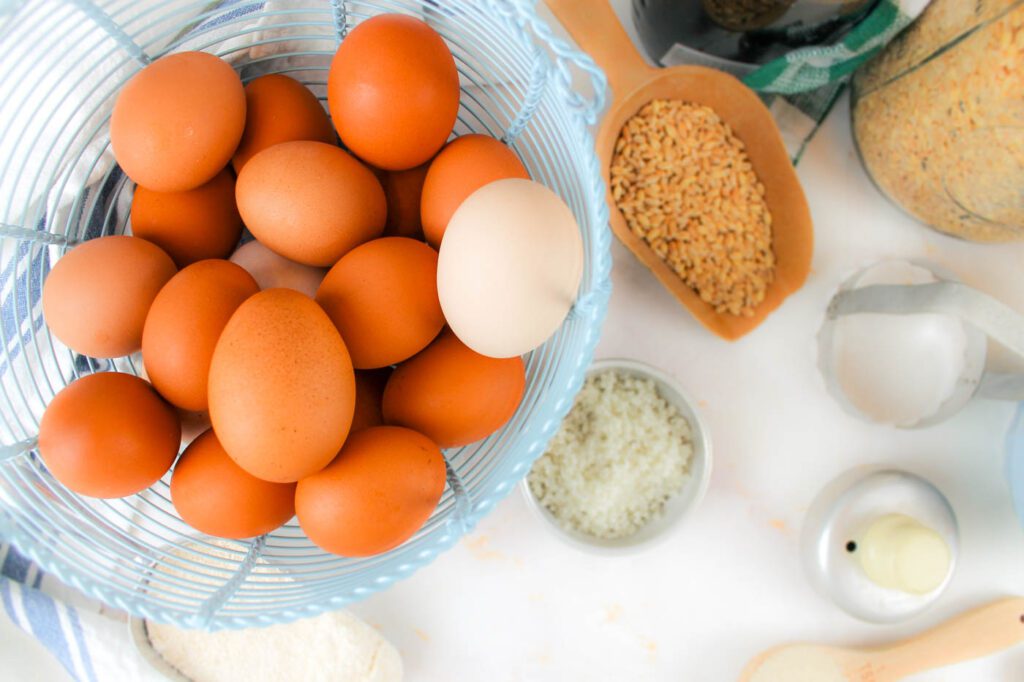
In addition to fresh milled wheat, you will need several other items for baking bread. Here are a few items to help create the best bread with fresh milled flour. Several of them you may already have on hand!
- Yeast – This living organism is used as a leavening agent in bread recipes. When combined with water and wheat, the yeast ferments the sugars in the dough and produces carbon dioxide helping the dough to rise. Active or instant yeast will work but I usually opt for instant yeast when making fresh milled bread.
- Salt
- Honey – I highly recommend using raw, unpasteurized honey.
- Oil or butter – Most recipes call for some type of fat. I find a good quality olive oil or butter adds a pleasant flavor and tenderness to bread while also helping to keep the bread fresher for longer.
- Water or milk
- Vital wheat gluten – If the wheat is lower in protein, adding vital wheat gluten to your homemade bread recipe will help the loaf to rise higher. 1/4 teaspoon of vital wheat gluten for every cup of ground flour should improve the the height and density of your bread.
- Sunflower lecithin – used as an emulsifier, this ingredient greatly helps to create a softer, less dense bread with a lot less crumbling.
- Eggs
Tools You Need to Get Started
Obviously the most important item you need besides wheat is a grain mill. All of the other items on the list below are not required but they sure do make the process of baking much easier.
Grain Mill
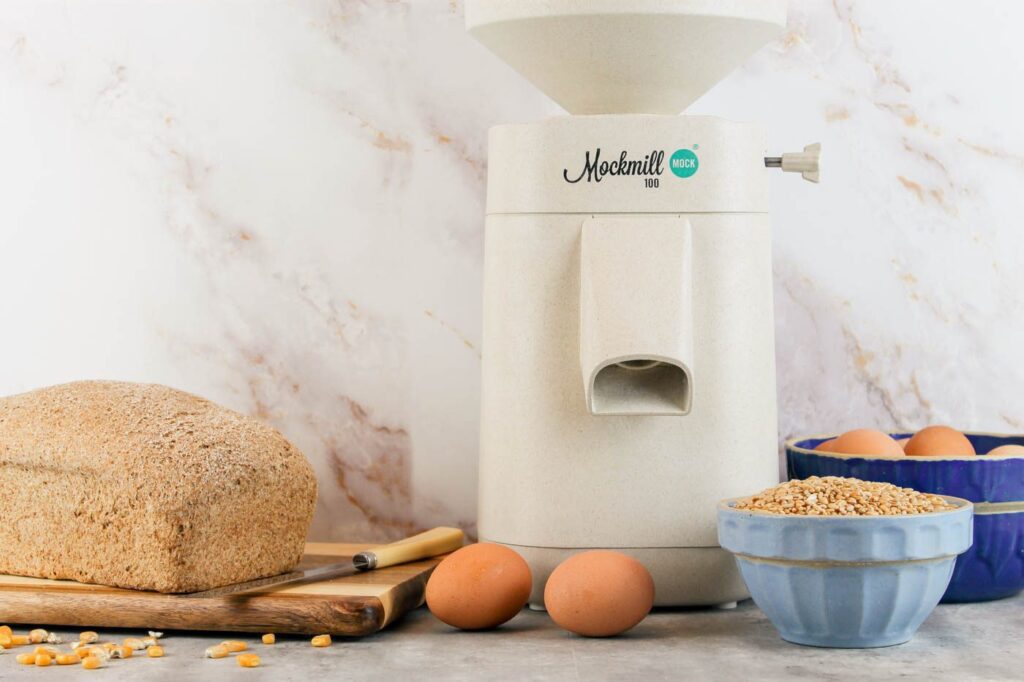
There are many types of small grain mills for home use available to purchase. Everything from stone mills and impact grain mills to manual and electric. Each mill comes with a unique set of tools to turn a grain into a bowl of flour.
On our homestead, I am partial to the Mockmill, a simple machine that uses two stones to grind grains. I use our small grain mill to make biscuits, breads, rolls and desserts. While this mill may work well in our kitchen, you may prefer a different style.
I have a very detailed article on how to choose the best grain mill including pros and cons of each type and where you can purchase a mill for home use. You can read the entire post here.
Stand Mixer
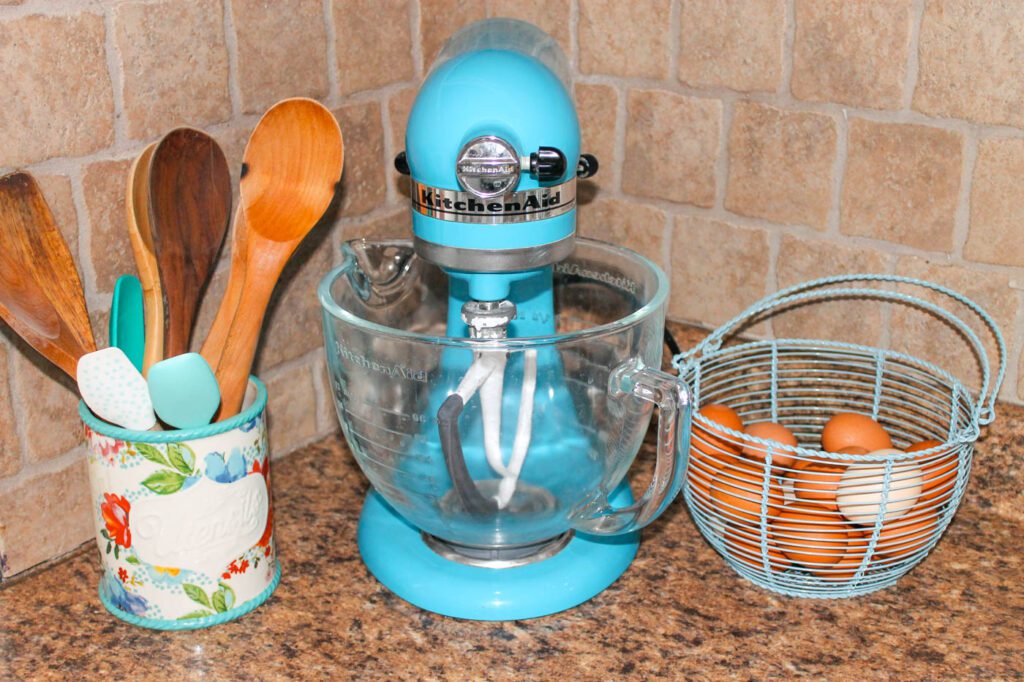
Technically the dough for bread or rolls can be made by using a simple bowl and a little arm muscle to knead the dough. But most people don’t have the time or desire to put the effort into mixing and hand kneading the dough. A stand mixer does all the work for you so that you can walk away and get other things checked off your to-list.
A Kitchen Aid mixer is what I use in my kitchen. However, if you have a larger family and the budget for a big mixer, many people like the Ankarsrum or the Bosch mixer. Both can make several loaves of bread at once.
Loaf Pan
If you plan to make quick breads or sandwich breads, you will need a loaf pan. A standard 8 1/2” x 4 1/2” loaf pan is what many recipes call for however having both that and a 9” x 5” is a blessing to have in the kitchen. Loaf pans can come in a variety of materials including steel, nonstick, glass and ceramic.
Cookbook or Collection of Trusted Fresh Milled Flour Recipes
On this site you can find recipes for cookies, breads, rolls and special treats for seasonal happenings or holidays. Each recipe you should be able to print off and put in your recipe box or in a binder. For a bound cookbook of recipes, I recommend purchasing the following:
The Essential Home-Ground Flour Book
Additional Helpful Baking Supplies
- Measuring cups
- Measuring spoons
- Mixing bowl
- Spatula
- Tea towel or plastic wrap
- Parchment paper
- Baking sheet
- Rolling pin
- Oven mitts
- Cooling rack