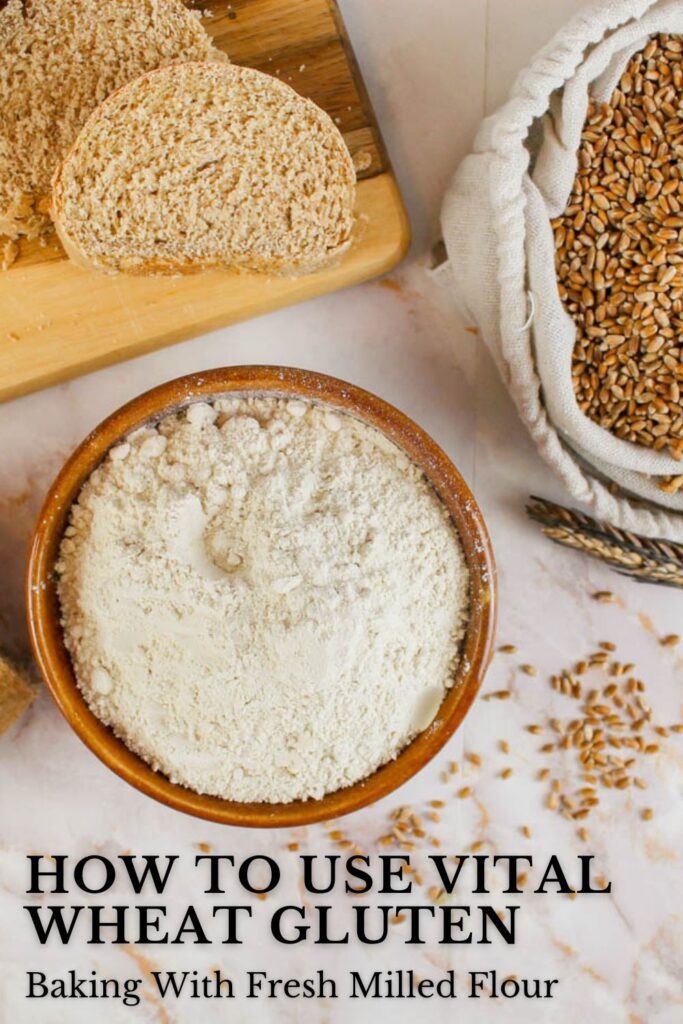
When making bread with fresh milled flour you may come across a recipe calling for vital wheat gluten. In this post, learn what is vital wheat gluten and how to use it in baking.
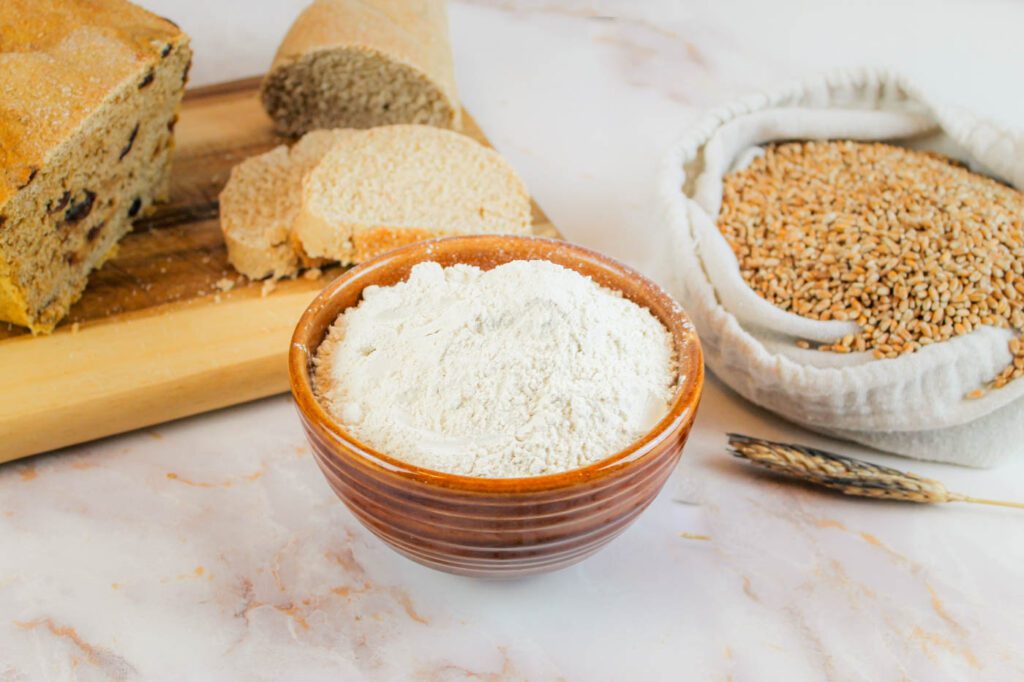
When you begin your journey of milling grains at home to produce fresh milled flour, there are many things that can be confusing.
For instance, have you come across a recipe calling for vital wheat gluten?
“What is vital wheat gluten?”. I can remember when I began baking with freshly milled flour, I asked myself the same question. And what do you do with vital wheat gluten? Is it necessary?
Not knowing what this ingredient was at the time, I simply ignored it and figured my bread would probably be okay without it.
And for the most part, it was.
Baking with fresh milled flour is extremely important on our homestead. It is my passion to feed my family real, nutritionally dense foods as well as share and teach others about this healthy bread.
If you’d like to learn about baking fresh milled flour, stick around. I’ll answer your question about what is vital wheat gluten and show you exactly how to use it in a variety of recipes. And if you’re new to whole grains, I have a free getting started guide that may be useful to you. Scroll below to download a copy.
Why You Will Love Fresh Milled Flour
Incredibly nutritious – Fresh milled flour is packed full of both insoluble and soluble fiber, vitamins, minerals, antioxidants, magnesium, iron, vitamin B, vitamin E and more.
Easy to Use – No sifting, removing or adding in synthetic ingredients with fresh milled flour. Plus it takes a mere few seconds to dump a cup of wheat berries into the mill and transform it into flour.
Know What You’re Eating – With fresh milled flour you can control what goes into your bread so that you can make it your own. No sifting, removing or adding in synthetic ingredients with fresh milled flour.
What is Vital Wheat Gluten?
Vital wheat gluten is a powdered substance that looks like flour but cannot be used in the same manner. The pure gluten is used in baking recipes, particularly in dough for making bread to help improve structure, elasticity and rise. This product is important to use especially when using fresh milled flour. Only a small amount of vital wheat gluten should be used in a recipe.
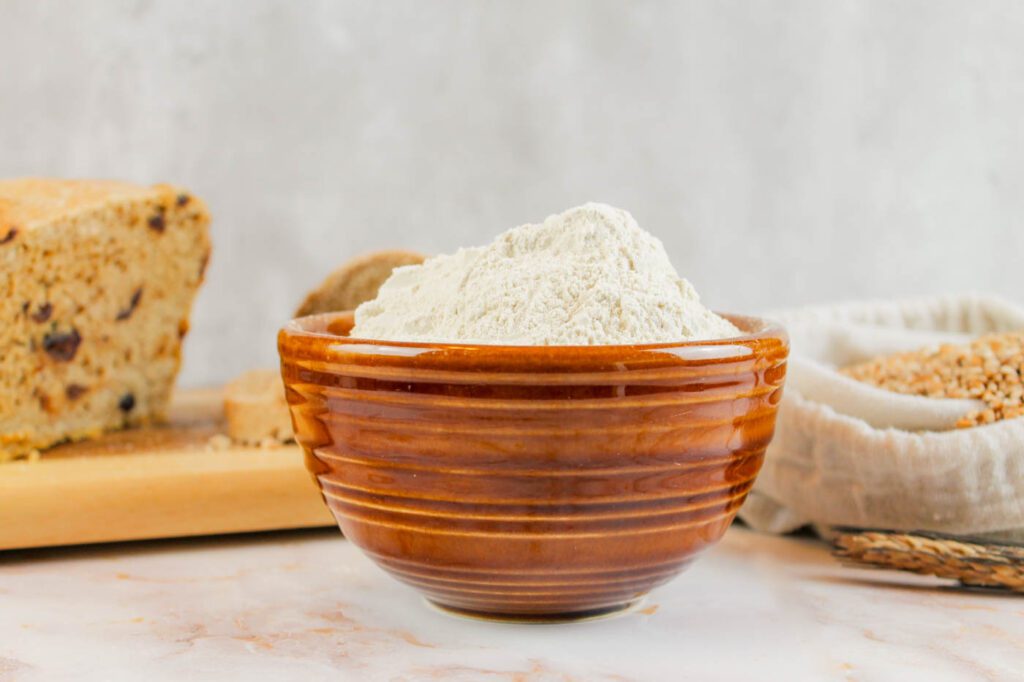
How is Vital Wheat Gluten Made?
This high concentration of gluten known as vital wheat gluten is produced using a process called gluten washing. Wheat flour dough is washed with water, removing the starch. The remaining protein is strained, dried and ground into a powder creating vital wheat gluten. This gluten protein can then be used in breads, rolls and anything that needs a little lift when rising.
What Does Vital Wheat Gluten Do in Baking?
Adding vital wheat gluten to homemade bread will help the loaf rise higher. The extra gluten provides the proper support that occasionally is needed when making bread with fresh milled flour.
Vital wheat gluten should only be used when the protein in the wheat is a bit on the low side. You will know this is the case if your bread is flat and crumbly. Or if the dough is dense and not very stretchy after is has been kneaded.
Hard wheat with a low amount of protein can happen due to uncontrollable circumstances such as drought. So if you find you are having trouble with your bread rising properly, don’t hesitate to toss in some extra gluten and see if that fixes the problem.
How Much Vital Wheat Gluten Per Cup of Flour?
1/4 teaspoon of vital wheat gluten for every cup of fresh milled flour should improve the the height and density of your bread.
Vital Wheat Gluten Uses
The primary use for vital wheat gluten is for making fluffy bread, especially whole grain bread recipes using freshly milled flour. Here are a few recipes that vital wheat gluten would work well in.
Cranberry orange cinnamon bread
How to Use Vital Wheat Gluten for Making Homemade Bread
When baking bread with fresh milled flour, you may need a little support to help get the bread to rise well. This is particularly true when using lower-protein wheat varieties such as spelt, rye, kamut, emmer and even some modern day wheat types such as hard white wheat that may have less than optimal gluten due to the growing conditions.
When using vital wheat gluten for bread making, use 1/4 teaspoon of gluten for every cup of fresh milled flour. For instance in the sandwich bread recipe above, in step one when adding the water, butter, honey and salt, add in the 1 1/4 teaspoon of vital wheat gluten. Mix until combined then add the flour and proceed with the recipe as written. Using vital wheat gluten for baking bread is very simple.
Where to Buy Vital Wheat Gluten
- My favorite place to buy organic vital wheat gluten is from Azure Standard
- Some grocery stores offer vital wheat gluten
- Amazon
- Amish and mennonite bulk food stores
- King Arthur Baking
- Walmart website (some in person locations as well)
FAQ
Is Vital Wheat Gluten Necessary?
No. Vital wheat gluten is never required and should only be used when needed and never in an abundance.
Can I Omit Vital Wheat Gluten in Recipes?
Yes! If the wheat berries you are using have the optimal amount of protein, then you can omit the vital wheat gluten. In my own baking on the homestead, I only use it occasionally.
Is Vital Wheat Gluten Healthy?
I would consider vital wheat gluten neither a healthy or unhealthy food. While it is high in protein, it should never be consumed in excess as it can be hard to digest.
Is Vital Wheat Gluten Gluten-Free?
No, vital wheat gluten is not gluten-free. It is a highly concentrated form of gluten and should be avoided by those with gluten or wheat sensitivities.
More Information About Fresh Milled Flour
Learn How to Mill Flour at Home
How to Choose the Best Grain Mill
What are the Best Wheat Berries